
Autor
Anhui Heshun Import and Export Co., Ltd. es un fabricante especializado en toldos, velas de sombra, mallas de sombra, persianas para estacionamientos, persianas, cercas para balcones, pantallas de privacidad y otros productos de protección para exteriores. Gracias a nuestro excelente equipo técnico y a nuestra maquinaria avanzada (30 juegos de máquinas de tejer y 5 juegos de máquinas de extrusión), nuestra empresa produce productos de calidad superior. Nuestra capacidad de producción diaria es de 8 toneladas métricas de HDPE importado 100 % puro. Nuestros productos se han exportado a Estados Unidos, Europa, Oriente Medio, Australia, Japón y África. Nos encontramos en la provincia de Anhui, cerca del puerto de Shanghái y de Nanjing.
Sara M.
Trying to decide between privacy fence screens and solid fence panels? Compare cost, airflow, installation, durability and flexibility to pick the right outdoor privacy solution.
If you want more privacy in your backyard, patio or pool area, two popular options will quickly catch your eye: solid fence panels and privacy fence screens. Many homeowners assume a solid fence is the only reliable way to block neighbours’ view. But privacy fence screens have grown rapidly in popularity, and they are not just a cheap alternative. Each option has clear strengths and drawbacks. We break down every key factor so you can make a confident choice.
Upfront Cost & Budget
Solid fence panels — wood, vinyl, composite or metal — are the permanent, premium choice. Materials and professional installation add up fast. You need posts, rails, hardware, labour and ongoing finishing work like staining or painting. If you have a large perimeter, the total bill can become surprisingly high.
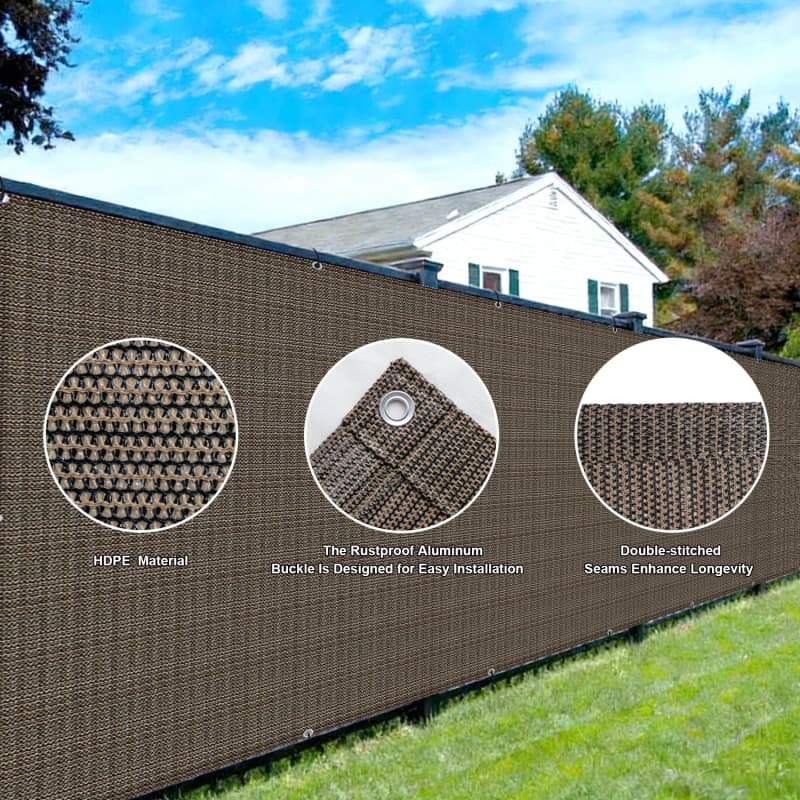
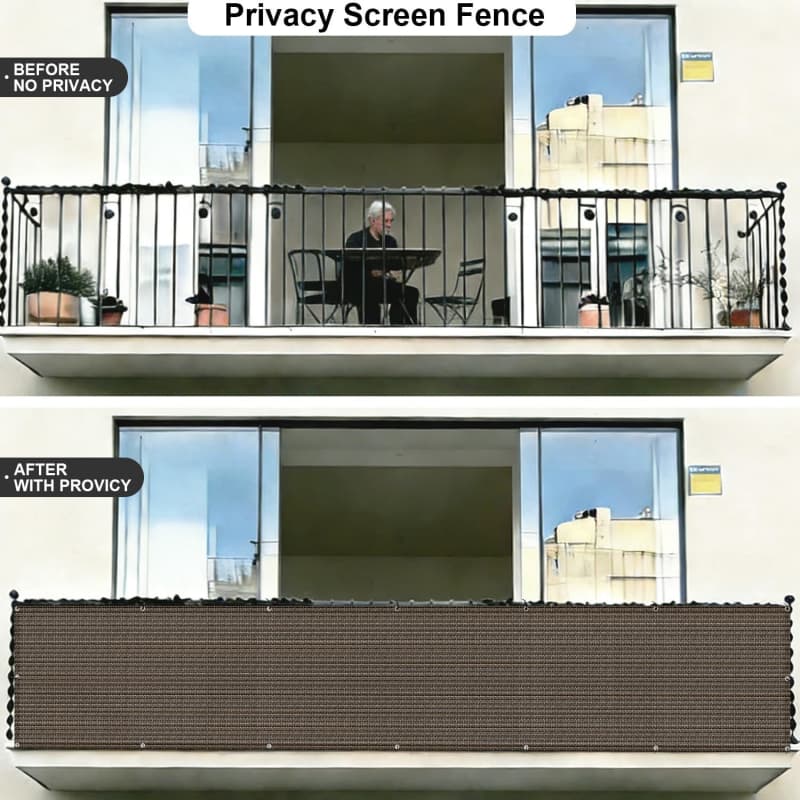
Privacy fence screens are far more budget-friendly. Made of UV-stabilized HDPE woven fabric, they attach directly to your existing chain link, metal or wooden fence. No tearing out your current fence, no heavy posts and no complicated construction work. You only pay for the screen itself and simple mounting accessories like cable ties. This makes it perfect if you want privacy without a big renovation budget.
Airflow & Heat Build-up
This is one of the biggest hidden differences. Solid panels create a fully closed barrier. They block sight completely, but they also trap air. On hot sunny days, heat builds up behind the fence. The space next to the panel can feel stuffy and uncomfortable. In strong wind zones, solid surfaces catch the wind like a sail, putting huge pressure on fence posts. Over time, this can lead to leaning, bending or collapse.
Privacy fence screens are breathable by design. The woven HDPE structure blocks clear views while letting fresh air pass through. Hot air does not get trapped against your yard. More importantly, wind flows through the material instead of pushing hard against the whole fence structure. It greatly reduces wind load, which is a huge advantage for coastal, windy or storm-prone areas.
The trade-off: it is semi-opaque, not fully sight-proof at extremely close range. If you need total visual blockage, solid panels win here.
Installation & Flexibility
Solid fence panels are permanent. Once installed, they stay there. Changing the height, colour or style means full replacement. Renters are almost never allowed to build them.
Privacy fence screens are a reversible upgrade. One or two people can finish installation in a short time with basic cable ties. You simply measure, stretch the screen moderately and fasten it along the fence frame. It can be cut easily to fit odd sizes, gates or uneven fence lines. When you move, or when you want to refresh your backyard look, you can cut the ties, roll it up and reuse it at your next property. That is a massive plus for renters and people who love updating outdoor decor.
Durability & Outdoor Lifespan
High-quality solid vinyl or composite panels can last many years with minimal care. Wood looks beautiful but requires regular staining, sealing and maintenance to fight rot, mould and insects.
A good HDPE privacy fence screen is infused with UV stabilizers to resist fading, tearing and sun damage. It handles rain, light frost and daily sun exposure well. Rainwater passes through, so there is no standing water and less mildew risk. That said, it is fabric, not rigid board. It is not indestructible. In extreme hurricane-level winds, heavy falling branches or sharp abrasive objects, it can tear. Solid panels offer better resistance to physical impact. Cheap un-stabilized screen fades and turns brittle within months. Always pick heavy-duty UV-treated HDPE if you want long service life.
Maintenance
Solid wood fences need regular upkeep: cleaning, staining, sealing and checking for rot. Vinyl panels are easier, but dirt and mould can stick to the flat surface and require scrubbing.
Privacy fence screen maintenance is simple. Rinse it with a garden hose when dust or dirt builds up. No painting, sealing or refinishing required. If one section gets damaged, you can replace just that piece instead of the whole fence.
Which One Is Right For You?
Choose privacy fence screen if:
- You are on a limited budget
- You rent your home and cannot build permanent structures
- You live in a windy area and want to reduce wind pressure
- You want breathable shade and do not like stuffy enclosed spaces
- You want a temporary, removable or reusable privacy solution
- You have an existing chain-link fence you want to upgrade
- You want flexible sizing and multiple colour options
Choose solid fence panels if:
- You require 100% visual privacy at all distances
- You need strong impact resistance against falling debris
- You plan to stay in the home long-term and want a permanent landscape feature
- Local building codes or HOA rules require solid fencing
Final Thoughts
Solid fence panels deliver maximum privacy and rigid strength, but they come with a high price tag, poor airflow and permanent installation. Privacy fence screens strike a balanced middle ground: affordable, breathable, wind-friendly and flexible. They are not trying to replace solid fences for every scenario. Instead, they offer a smart, low-commitment way to turn your ordinary fence into a quiet private retreat.
If you value airflow, budget and flexibility, a heavy-duty UV stabilized privacy fence screen is absolutely worth considering.


 English
 español


 Red IPv6 compatible