
Autor
Anhui Heshun Import and Export Co., Ltd. es un fabricante especializado en toldos, velas de sombra, mallas de sombra, persianas para estacionamientos, persianas, cercas para balcones, pantallas de privacidad y otros productos de protección para exteriores. Gracias a nuestro excelente equipo técnico y a nuestra maquinaria avanzada (30 juegos de máquinas de tejer y 5 juegos de máquinas de extrusión), nuestra empresa produce productos de calidad superior. Nuestra capacidad de producción diaria es de 8 toneladas métricas de HDPE importado 100 % puro. Nuestros productos se han exportado a Estados Unidos, Europa, Oriente Medio, Australia, Japón y África. Nos encontramos en la provincia de Anhui, cerca del puerto de Shanghái y de Nanjing.
Sara M.
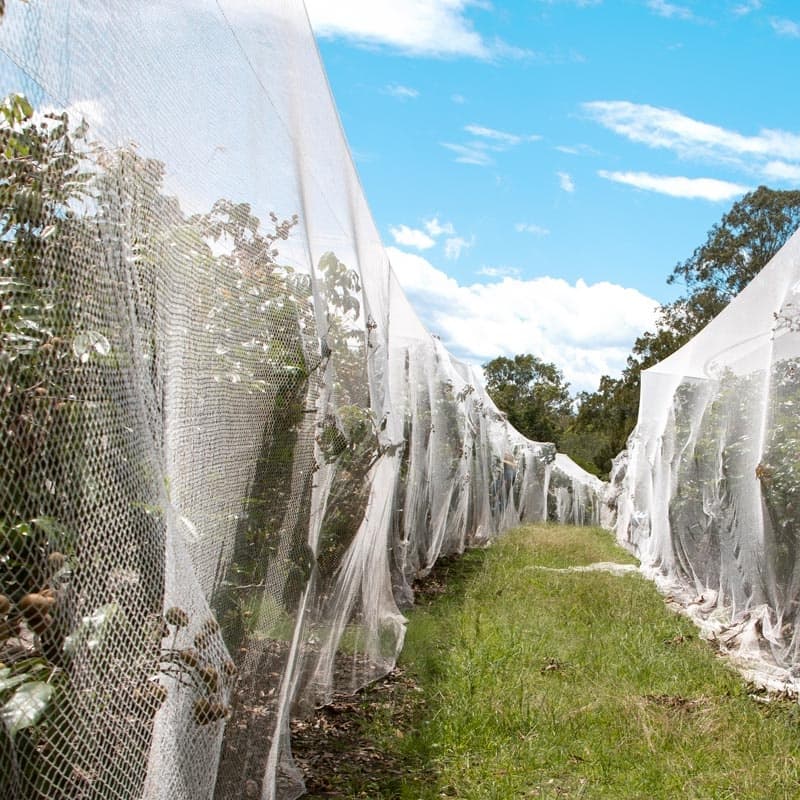
If you’ve ever bought a low-cost anti bird net, you probably know the frustrating cycle: it works fine in the first season, turns brittle, cracks and tears by the second harvest. Many growers assume all HDPE bird nets are the same. The hidden difference lies in how UV protection is added.
Not all UV treatment delivers the same lifespan. Cheap nets only spray UV coating on the surface. Premium nets mix UV masterbatch into HDPE resin before extrusion. This single technical gap decides whether your bird net lasts one season or can be reused for years. In this article, we break down the aging mechanism, compare two UV treatment methods, and explain how the right UV-stabilized bird net cuts your long-term farm cost.
What Makes Plastic Nets Break Down Outdoors?
The main culprit is ultraviolet radiation from sunlight. UV rays break the molecular chains of polyethylene. When these chains split, the material loses flexibility and tensile strength. The net becomes stiff, brittle, easy to crack under wind, rain and temperature changes.
Other harsh conditions speed up aging further:
- Strong direct sunlight: Orchards in high-UV regions face faster degradation.
- Coastal environments: Salt spray combines with UV to accelerate material damage.
- Heavy rainfall & high humidity: Constant moisture weakens surface coatings.
- Wind friction: Branches, supports and gusts wear away thin outer layers.
Surface-treated nets fail quickly in these environments. UV protection disappears once the outer layer wears off.
Surface UV Coating vs Masterbatch UV Blending
Surface-sprayed UV coating (Common on cheap bird nets)
UV agent is only sprayed onto the finished net surface.
- The protective layer is extremely thin.
- It can be washed off by rain, rubbed off during installation or contact with branches.
- Once the coating wears away, raw HDPE is exposed directly to UV.
- Typical service life: 1–2 growing seasons. After that, the net turns brittle and splits easily.
- Downside: Low upfront price, but frequent re-purchases and extra labor raise your total cost year after year.
UV masterbatch blended into virgin HDPE resin (Our production method)
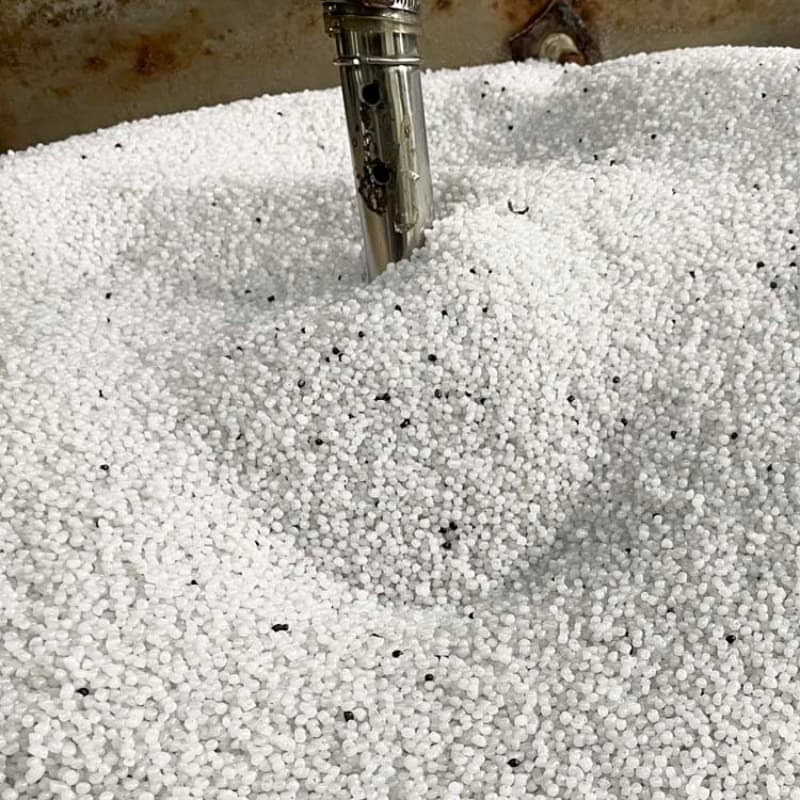
UV stabilizer masterbatch is mixed evenly with HDPE pellets before filament extrusion. The anti-UV ingredient exists inside every fiber, not only on the skin.
- Protection runs through the whole cross-section of the thread. Scratches, friction and rain will not remove the UV formula.
- Even if the surface is slightly worn, the inner material still retains anti-aging performance.
- Consistent tensile strength and flexibility after years of outdoor exposure.
- Typical service life: 3–5 years under normal outdoor conditions, reusable across many harvest cycles.
- Downside: Slightly higher initial cost, but much better value for long-term planting projects.
Performance in Different Tough Outdoor Environments
High-sunlight orchards & vineyards Continuous strong UV is the biggest test. Masterbatch blended nets maintain flexibility, while sprayed nets go brittle after one or two summers.
Coastal farms with salt air Salt particles corrode surface coatings rapidly. Integral UV protection inside the fiber resists combined damage from salt and sunlight.
Rainy, humid planting zones Frequent rain washes away surface additives. Our UV-stabilized HDPE net keeps its integrity without relying on an outer coating.
Windy sites Repeated stretching and friction will scratch the net. Surface coating falls off fast, but internally blended UV protection stays effective.
Reusable Design = Lower Long-Term Cost
A durable UV-stabilized anti bird net is not a one-time consumable. After harvest, you can carefully remove, clean, fold and store it properly. It is ready for installation again next growing season.
Let’s compare the economics:
- Cheap coated net: Buy new every 1–2 years, repeated material cost + labor cost for replacement.
- Masterbatch UV HDPE net: One purchase, reuse for 5+ seasons. Less frequent ordering, less installation labor, less waste.
For large orchards, vineyards, aquaculture farms and greenhouse projects, this saving adds up significantly. It is a cost-effective investment instead of a recurring expense.
Quick Buying Checklist for Farmers & Distributors
When you source HDPE anti bird net, ask your supplier these questions:
1.Is UV stabilizer blended into the raw material, or only sprayed on the surface?
2.Is it made from virgin HDPE or recycled material?
3.What is the guaranteed service life under full sun exposure?
4.Can the net be folded, stored and reused season after season?
Conclusion
UV protection is not just a marketing buzzword. It is the core difference between a disposable net and a long-lasting crop protection asset. Surface coating fades fast under sun, rain and friction. UV masterbatch blended HDPE locks anti-aging performance inside every filament, standing up to strong sunlight, coastal salt, heavy rain and wind.
Choosing our UV stabilized HDPE anti bird net means you get reliable bird exclusion year after year, reduce repeated purchasing work, and cut your overall farm protection cost.
FAQ
Q: Does black color equal better UV resistance?
A: Black pigment helps absorb UV, but pigment alone cannot replace UV stabilizer masterbatch. A black net with only surface UV coating will still turn brittle quickly.
Q: Can I leave the net outside all year round?
A: It can stay outdoors, but we recommend taking it down and storing it in a cool dry place after harvest to maximize its service life.
Q: Is knotted or knotless net better for long-term outdoor use?
A: Both are available with our UV blended HDPE formula. Knotted net has higher tear resistance for windy areas; knotless net has lower bird entanglement risk for orchards.


 English
 español


 Red IPv6 compatible